 111
111 2
2 3
3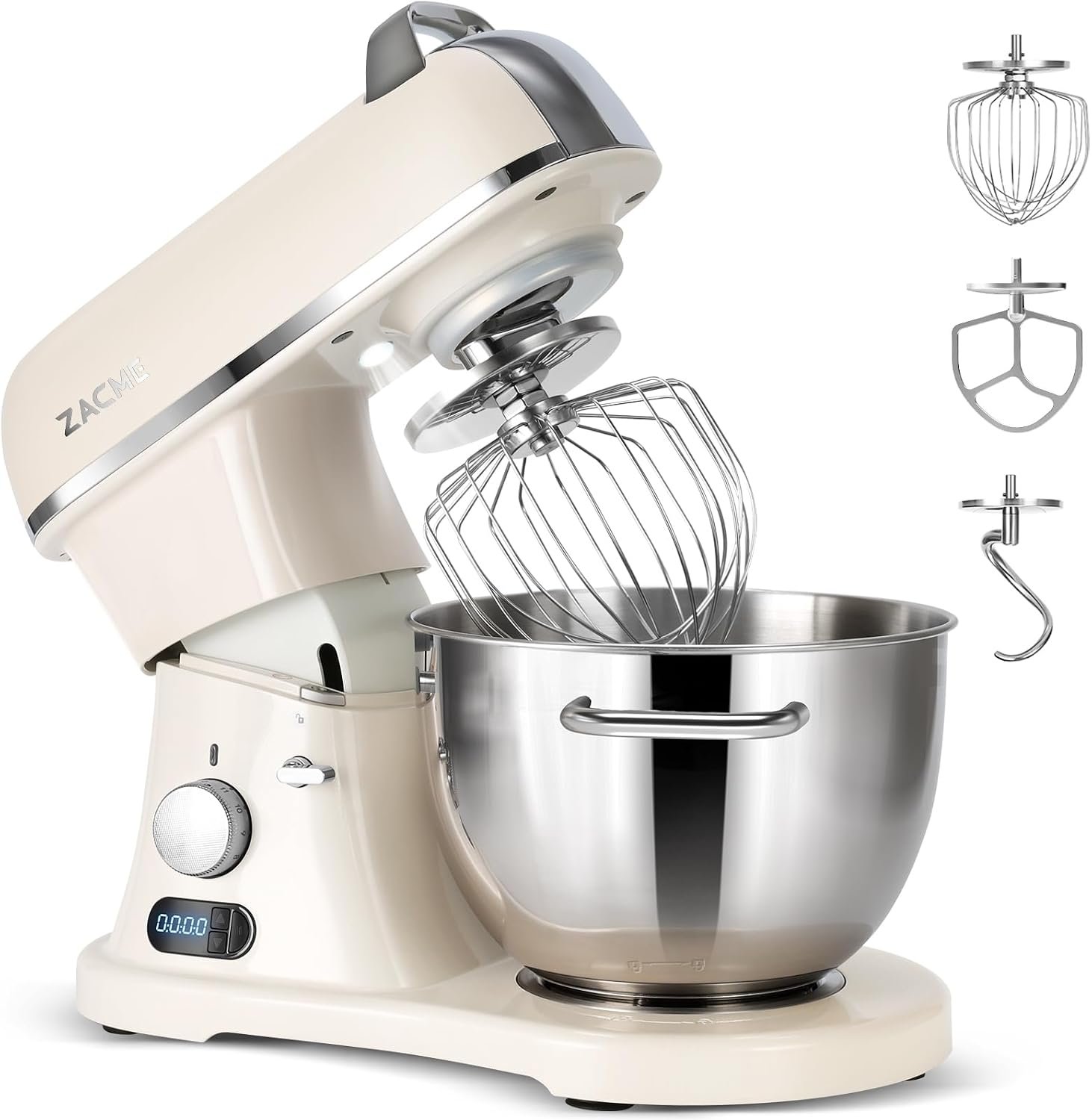
Stand mixers occupy a unique place in the kitchen appliance world, often serving as one of the most heavily used tools for anyone who bakes or cooks in larger quantities on a regular basis. While countertop models designed for casual home baking are widely available, there’s a distinct category of mixers built for more demanding, higher-volume tasks, whether that’s a home baker who processes large batches of dough regularly or a small food business that needs dependable equipment for daily production. The 8.4QT Commercial Stand Mixer, rated at 800 watts and built to meet NSF/ANSI 8-2023 standards, falls into this heavier-duty category.
This article takes a closer look at what this mixer offers, how it can be used across different cooking and baking scenarios, and what factors are worth considering before deciding whether it aligns with your kitchen or business needs.
This stand mixer is built with an 8.4-quart stainless steel bowl, offering a larger capacity compared to many standard home stand mixers, which often range between 4.5 and 6 quarts. The larger bowl size is generally intended for those who regularly prepare bigger batches of dough, batter, or other mixed ingredients, whether for personal baking projects or smaller-scale commercial food production.
The mixer is powered by an 800-watt motor, which is a notably higher power rating compared to many entry-level or mid-range home mixers. This is paired with an aluminum die-cast body, a construction method generally associated with added durability and heat dissipation during extended use. Additionally, this model is noted as meeting NSF/ANSI 8-2023 standards, which relates to food equipment sanitation and material safety guidelines often referenced in commercial food service settings.
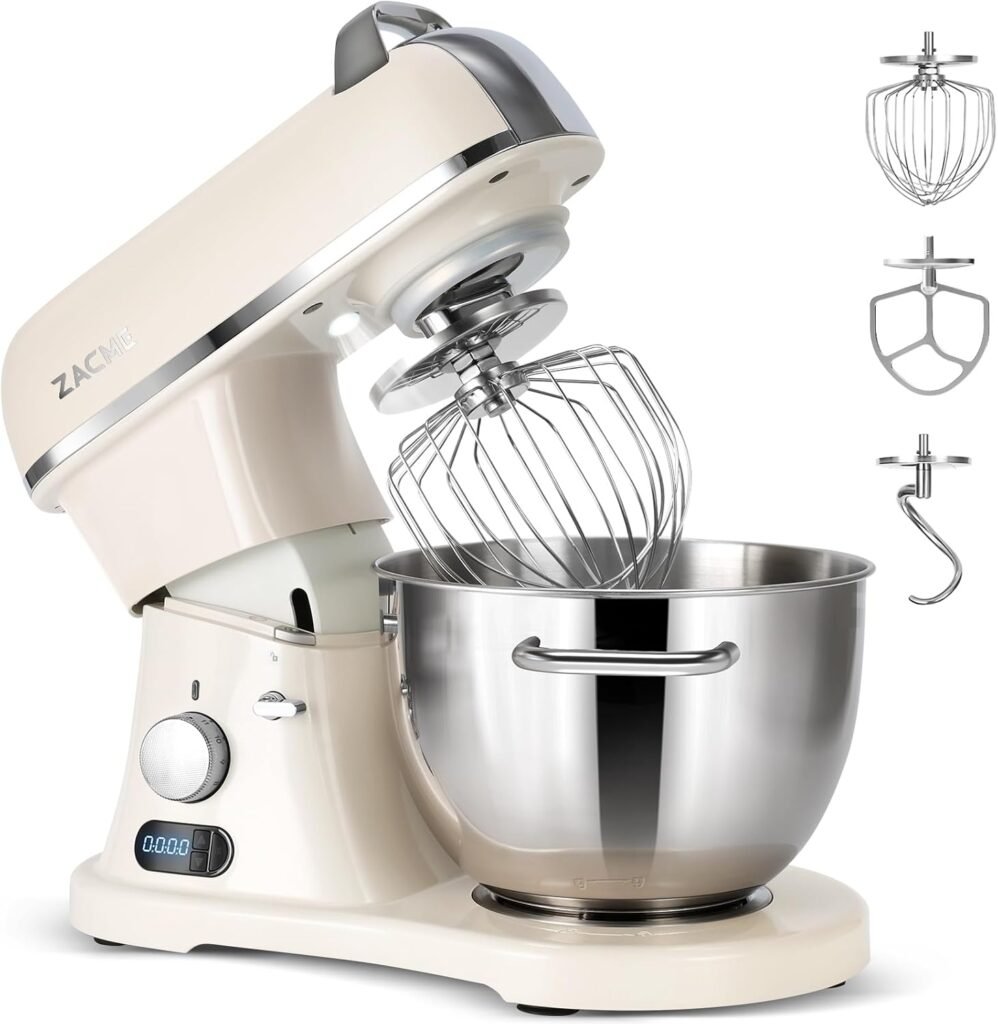
The mixer typically comes with a set of standard attachments, including a dough hook, whisk, and beater, allowing it to handle a range of mixing tasks beyond just basic batter preparation.
The bowl capacity is one of the more significant features of this mixer, offering substantially more mixing volume compared to standard home mixers. Stainless steel construction is generally favored for its durability, resistance to staining, and ease of cleaning compared to some alternative bowl materials.
A higher wattage motor is typically associated with the ability to handle denser mixtures, such as thick bread doughs, without straining or overheating as quickly as lower-powered motors might under similar conditions.
This construction method is often chosen for its combination of durability and relatively lighter weight compared to solid cast iron, while still providing a sturdy frame capable of withstanding the vibration and torque associated with heavy mixing tasks.
This standard relates to commercial food equipment, generally covering aspects like food safety, material sanitation, and construction guidelines. Meeting this standard may be particularly relevant for those using the mixer in a licensed commercial kitchen or small food business setting, where equipment compliance can be a practical or regulatory consideration.
The mixer typically comes with a dough hook for bread and pizza dough, a whisk for whipping eggs, cream, or light batters, and a flat beater for general mixing tasks like cake batters or cookie dough. Having these three attachments included allows the mixer to handle a broad range of common baking and cooking tasks without needing to purchase additional accessories separately.
Because of its bowl size and motor power, this mixer is generally positioned toward those who need to prepare larger quantities in a single mixing session, which can reduce the number of batches needed for larger baking projects.
The dough hook attachment, combined with the higher-powered motor, makes this mixer well suited for kneading bread dough, pizza dough, and other yeast-based doughs that require thorough mixing to develop gluten structure.
The flat beater attachment can be used for standard baking tasks like mixing cake batters, cookie dough, and other mixtures that require a more moderate mixing action compared to whipping or kneading.
The whisk attachment is generally used for tasks like whipping cream, beating egg whites, or preparing meringues, where incorporating air into the mixture is the primary goal.
Given its NSF/ANSI 8-2023 compliance and larger capacity, this mixer may be used in small bakeries, catering operations, or other food businesses that require reliable mixing equipment without necessarily needing an industrial-scale mixer.
For home bakers who regularly prepare large batches, whether for family gatherings, holiday baking, meal prepping, or selling baked goods at farmers markets or online, this mixer’s larger capacity can reduce the need for multiple mixing rounds.
Beyond baking, stand mixers with the right attachments can also be used for tasks like mixing meatloaf or meatball mixtures, preparing mashed potatoes, or combining ingredients for certain no-bake recipes that require thorough blending.
Those who bake frequently and in larger quantities, whether for personal enjoyment, family needs, or small-scale sales, may find the larger bowl capacity and motor power align well with their baking habits.
Given its commercial-oriented construction and compliance with NSF/ANSI 8-2023 standards, this mixer may be relevant for small food businesses that need dependable mixing equipment without investing in larger, more expensive industrial models.
Because bread dough is one of the more demanding mixing tasks in terms of motor strain, those who bake bread regularly may appreciate a mixer built with a higher-powered motor specifically capable of handling denser doughs.
Households or businesses that want a single mixer capable of handling a wide range of tasks, from whipping to kneading to general mixing, may find the included attachment set covers most of their needs without requiring separate specialized equipment.
For those who prepare food for events, catering, or larger gatherings on a semi-regular basis, the larger capacity can help streamline preparation for bigger recipes or multiple dishes at once.
Given its larger bowl capacity and construction, this mixer is likely to be bulkier and heavier than standard home stand mixers, which is worth factoring into available counter space and storage options, particularly for smaller kitchens.
Higher-powered motors, particularly those handling dense mixtures like bread dough, can generate more noise during operation compared to smaller, lower-wattage mixers. This is generally a normal characteristic of higher-torque motors rather than an indication of malfunction.
Aluminum die-cast construction, while durable, still results in a heavier overall unit compared to some lighter home mixers. This is worth considering for those who may need to move the mixer frequently between storage and use.
For those specifically purchasing this mixer for use in a licensed commercial kitchen, it’s worth understanding the specific requirements of NSF/ANSI 8-2023 and confirming how this particular model’s compliance aligns with local health department or regulatory requirements, as these can vary by jurisdiction.
While the mixer comes with a standard set of attachments, those interested in additional accessories, such as pasta rollers or meat grinders, should verify compatibility with this specific model before assuming universal attachment compatibility across different mixer brands.
Working with a larger bowl and more powerful motor may require some adjustment for those accustomed to smaller home mixers, particularly around ingredient quantities and mixing times, which can differ from smaller-batch recipes.
When looking at stand mixers as a broader category, a few general types are worth understanding:
Entry-Level Home Stand Mixers typically feature smaller bowl capacities and lower-wattage motors, making them suitable for occasional baking and smaller recipes, but potentially less equipped for dense doughs or large-batch mixing.
Mid-Range Home Stand Mixers often bridge the gap, offering moderate bowl sizes and motor power suitable for regular home baking, including most bread and cake recipes, without necessarily being designed for continuous, heavy-duty commercial use.
Commercial-Grade Stand Mixers, such as this 8.4QT model, are generally built with larger capacities, more powerful motors, and construction standards intended to support more frequent and demanding use, whether in a small business setting or for high-volume home baking.
Industrial Stand Mixers represent the largest and most powerful tier, typically used in large bakeries or food manufacturing settings, often featuring bowl capacities and motor power well beyond what most home kitchens or small businesses would require.
Each category serves different needs based on batch size, frequency of use, and whether the mixer will be used in a personal or commercial context, with the right choice depending on specific baking or food preparation demands.
What does NSF/ANSI 8-2023 compliance mean for this mixer? This standard relates to food equipment sanitation and material safety guidelines, often referenced in commercial food service contexts. Meeting this standard may be relevant for those using the mixer in a licensed commercial kitchen, though specific regulatory requirements can vary by location.
Is this mixer suitable for home use, or is it strictly for commercial kitchens? While built with commercial-oriented standards and capacity, this type of mixer can also be used in home kitchens, particularly by those who bake in larger quantities or want a more heavy-duty mixer for demanding tasks like bread dough.
What attachments come included with this mixer? This model typically includes a dough hook, whisk, and flat beater, covering a range of common mixing tasks from bread kneading to whipping to general batter mixing.
Can this mixer handle dense bread dough without straining? The 800-watt motor is generally designed to handle denser mixtures like bread dough more effectively compared to lower-powered home mixers, though performance can vary depending on specific dough recipes and quantities.
How much bowl capacity does this mixer offer compared to standard home mixers? This mixer features an 8.4-quart bowl, which is notably larger than many standard home stand mixers that typically range between 4.5 and 6 quarts.
Is aluminum die-cast construction durable for frequent use? Aluminum die-cast construction is generally considered durable and well-suited for handling the vibration and torque associated with heavy mixing tasks, while remaining relatively lighter than solid cast iron alternatives.
The 8.4QT Commercial Stand Mixer represents a heavier-duty option within the broader stand mixer category, combining a larger bowl capacity, higher-powered motor, and commercial-oriented construction standards intended for more demanding mixing tasks. For high-volume home bakers, small food business owners, or those who regularly prepare large batches of dough or batter, this type of mixer may offer a practical solution for handling bigger recipes without the strain that smaller, lower-powered mixers might experience.
As with any significant kitchen equipment purchase, it’s worth considering factors like available counter space, typical batch sizes, and whether commercial compliance standards are relevant to your specific use case before deciding if this mixer aligns with your baking or food preparation needs. Taking time to understand its capacity and construction can help ensure it becomes a dependable tool in your kitchen, whether used for personal baking projects or small-scale food production.